

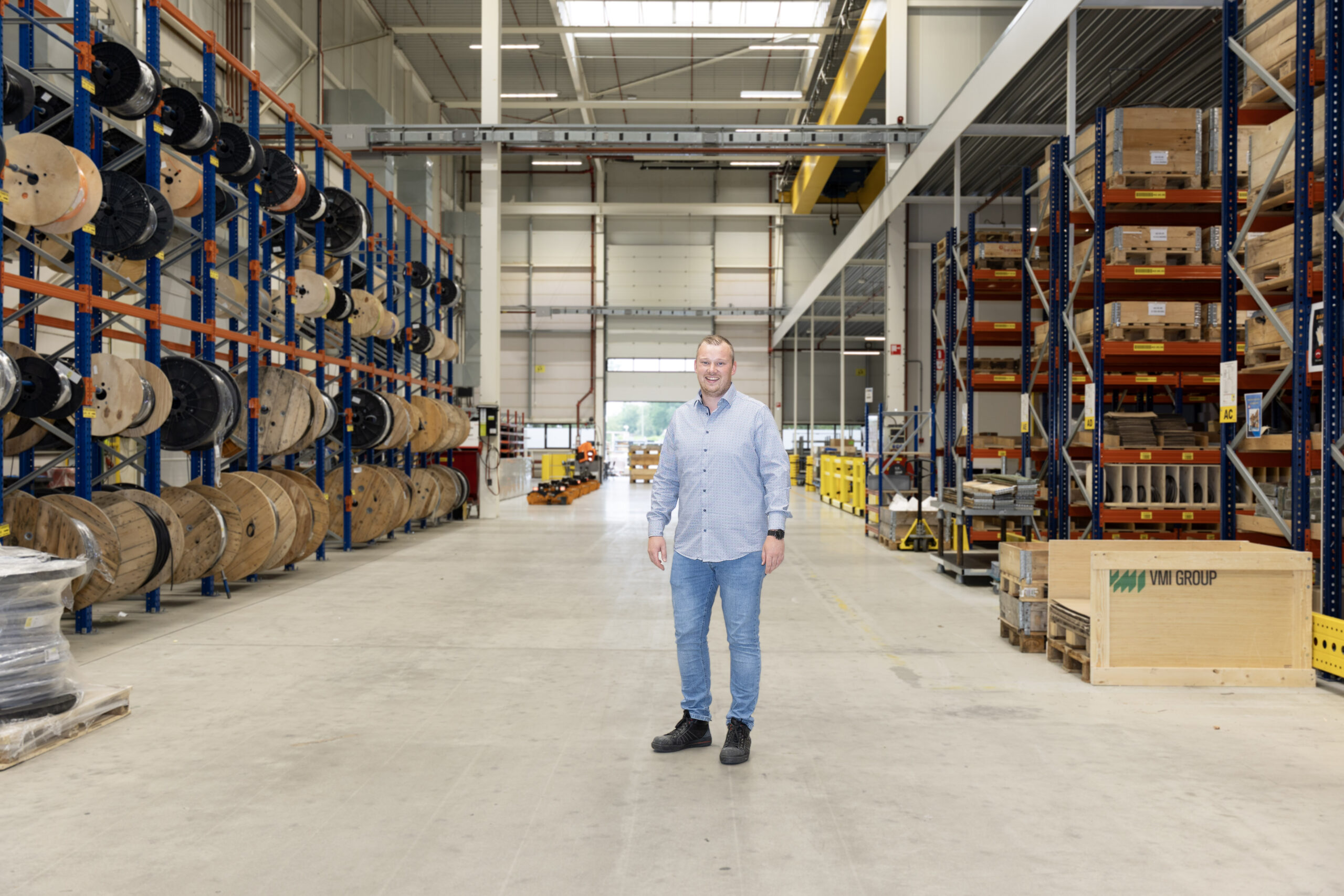
Richard believes sustainability works best when it is practical and owned by the people doing the work. He enjoys involving colleagues and turning ideas into visible improvements on the shop floor.
In Operations, Richard’s work is concrete and close to daily routines. The warehouse collaborates with teams like Facility, Travel and Production, but his main focus is on packaging materials, waste streams and circular ways of working. His guiding question is straightforward: how can we work as circular as possible?
“Sustainability starts with people.”
Several improvements are already in place, with direct impact. One example is the flow of materials between locations. Previously, materials arriving came in cardboard boxes that were discarded after unpacking. The team improved the process to reduce unnecessary waste in that loop.
Another example is the transport of large wooden frames. These frames used to arrive fully assembled, limiting how many could fit in a truck. Working with Purchasing, the team changed to flat-pack “build kit” deliveries so more units could be shipped per load. They also arranged direct delivery to the destination location when possible. This reduces transport movements and improves logistics efficiency.
Richard is realistic: packaging cannot be eliminated entirely because products must arrive safely. The goal is to make necessary packaging as sustainable as possible, often with cost benefits too.
Sustainability becomes real when employees contribute. Many ideas come from colleagues via the idea box, and strong suggestions have been rewarded. Richard and the team plan another session to show which ideas have been implemented and what they delivered, linking improvements not only to speed and cost, but also to sustainability and CO₂ reduction.
Richard expects sustainability to become an even stronger customer consideration alongside cost and delivery time. Even in an industry where change is complex, VMI can make a difference through smarter supply chains, fewer transport movements and more efficient processes. For him, progress comes from consistent, practical steps that add up over time.