

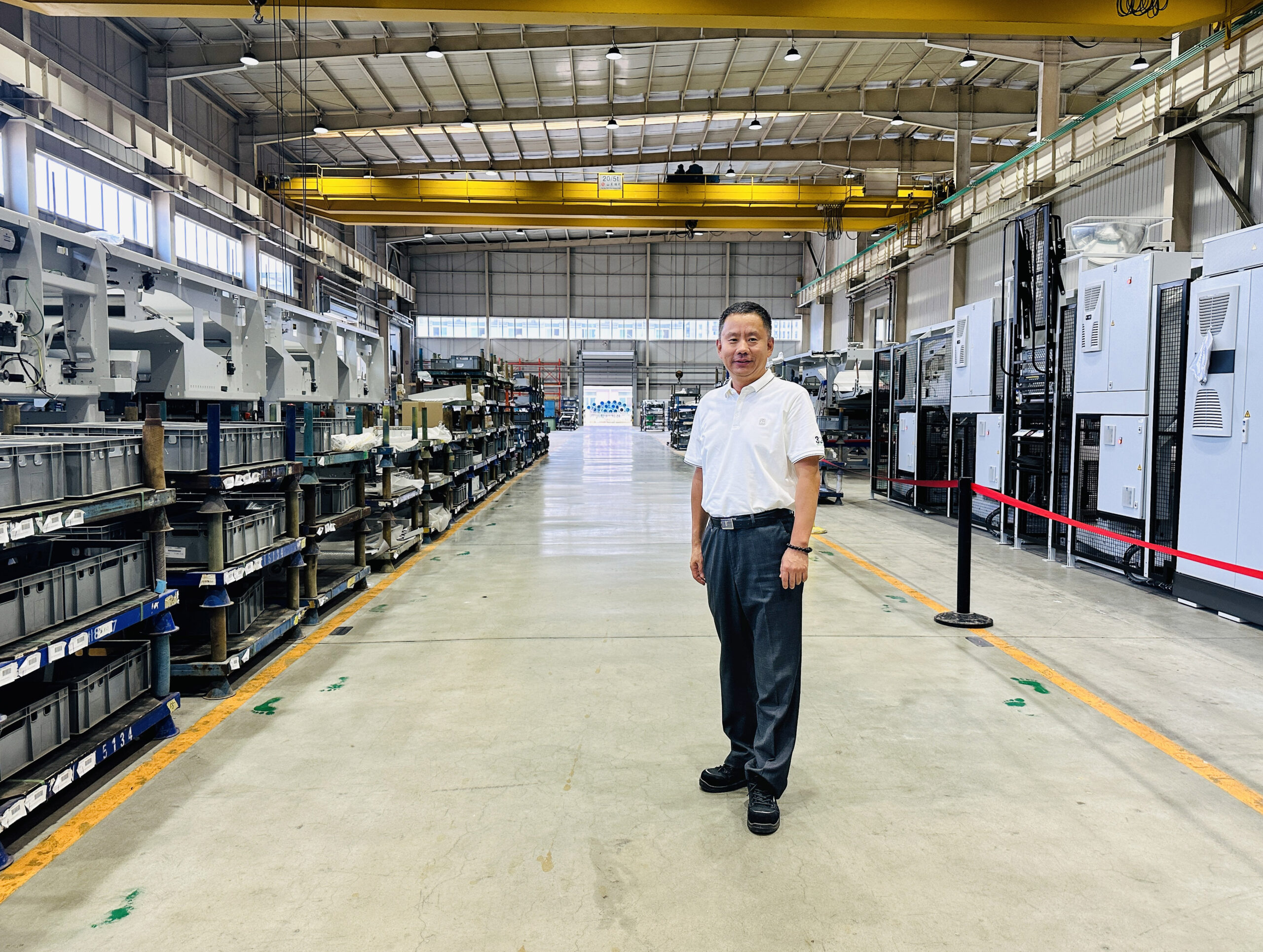
Sustainability in Yantai is increasingly becoming part of how decisions are made, from daily operations to longer-term investments and customer value. As General Manager of VMI Yantai, Edward Zhao Ying sits at the intersection of those topics.
Edward leads VMI’s global sustainability program, structured around five pillars. VMI Yantai launched its sustainability journey in January 2026. Since then, the site has delivered multiple training sessions for pillar leads and members. These teams are turning the program into concrete actions within their areas. Each pillar has a lead and a small team, sized according to the topic. Around 30–40 colleagues are directly involved across the five pillars, about 10% of the site workforce.
What stood out most to Edward is how much the scope has widened. Previously, sustainability could easily be understood as reducing emissions from your own operations. The training made it explicit that the impact is larger than that: beyond Scope 1 and 2, Yantai also needs to look at the “hidden impact” of Scope 3: upstream suppliers and downstream customers. In Edward’s words, “VMI is not working in isolation, but as part of the chain.”
“Previously, we thought CO₂ reduction was only about ourselves. But now we extend it to the upstream supplier and downstream customer side, so it’s a bigger scope.”
That broader view also makes the challenges more visible. One is awareness: “Different people have different understandings,” Edward explains. “Some will prioritize immediate income and short-term needs over air quality or long-term climate goals.” Another is practical: sustainability often requires investment, especially on the capital expenditure side, and the difficult part is balancing long-term sustainable development with short-term economic gain.”
Sustainability is not only a workplace topic. Edward sees it affecting daily life in China as well, with visible shifts such as heating systems increasingly moving toward electricity-driven solutions, changing habits around plastic bag use, and waste separation.
Looking ahead, Edward expects sustainability to become a clear differentiator for VMI in the market: “If VMI machines help customers reduce electricity consumption and scrap, it strengthens their position with their customers and creates ‘extra value’ that helps VMI stand out.” His long-term expectation is that Yantai will keep building this mindset: sustainability as measurable customer value, delivered through the full chain.